Software Engineering for AI
Build code that is understandable, testable, and easy for someone else to run. Keep applying these habits throughout Core Systems.
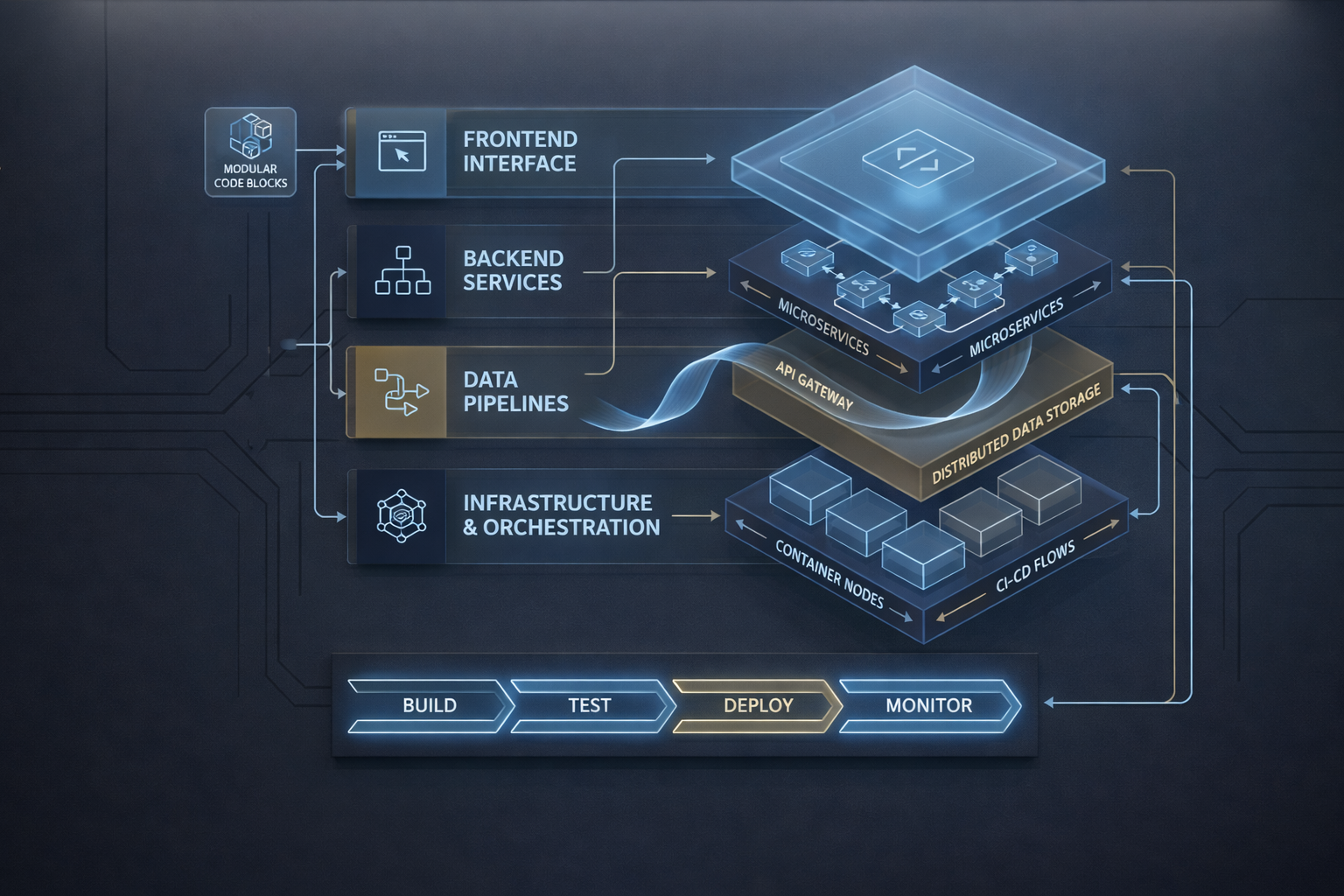
Structure your project
Separate application logic, configuration, and tests.
Verify behavior
Test normal cases and meaningful failures.
Collaborate and review
Use pull requests and verify AI-assisted changes.
Engineering workflow
make your code understandable, testable, and easy for someone else to run.
Before you start: Engineering Fundamentals Python, Git, terminal, and debugging skills.
Learn
- Separate data preparation, model/inference logic, application code, and tests.
- Manage dependencies and configuration; keep credentials outside committed code.
- Write focused functions, meaningful names, useful errors, and logs that help diagnosis.
- Use unit and integration tests to check behavior, including invalid inputs.
- Work through issues, branches, pull requests, and review feedback.
- Use a coding assistant with a clear task, relevant repository context, and acceptance criteria; inspect its diff and verify the result.
Resources
Clean Code: A Handbook of Agile Software Craftsmanship
Further reading. If access is available. Focus on chapters 2, 3, 4, 7, and 9 for naming, functions, comments, error handling, and tests. Free resources below support the required practice.
uv: Working on projects
Required. Create a project, add dependencies, and run it in a reproducible environment.
pytest: Get Started
Required. Write tests and assertions, then use fixtures where shared setup is needed.
GitHub: Reviewing and testing AI-generated suggestions
Required. Focus on intended uses, limitations, and verification. Apply the principles to your available coding assistant.
LeetCode: Programming Skills
Further reading. For specific implementation gaps. This does not replace the project task.
Practice
- Refactor a notebook into a small Python project with a documented command to run it.
- Write tests for normal inputs, boundary cases, and a realistic failure.
- Implement one bounded change using an AI assistant. Review each changed file, test the result, and record an issue you corrected or a suggestion you rejected.
- Submit the change through a pull request and respond to review.
Expected output
A runnable repository, meaningful tests, setup instructions, and a reviewed change. You can explain the code and fix a bug during discussion. If a coding assistant is unavailable, review a mentor-provided generated patch and complete the same verification task.
Workload
Use the provisional estimates where supplied. Other workloads remain pending pilot. Include implementation, debugging, review, and revision.
Finish this module
Keep the required outputs and explain your decisions. Diagnose a relevant failure during review and revise incomplete evidence after feedback. Resource completion supports progress; the stated practical requirements determine completion.