Who This Is For
Learners
For high school grads, university students, and career switchers who want a clear plan and portfolio-grade outputs.
Why This Exists
Free content is everywhere. Structure is not.
We turn scattered resources into a clear path by organizing what to learn, in what order, and where hands-on projects help connect theory to practice.
What this is
- A structured AI learning roadmap with curated references and optional projects.
What this is not
- A job guarantee.
- Not the HumbleBeeAI Academy program (separate).
Contribute
- Help us keep it sharp: improve modules, add resources, propose projects
Role-Based Tracks
Each track builds role-specific capability through guided topics and a final capstone project.
NLP & LLM — By the end, you can:
- Build reliable NLP systems with proper evaluation
- Create RAG-grounded LLM applications
- Design multi-step agent/tool workflows
- Know when to prompt vs RAG vs fine-tune
Meet the Builders
The core team building and maintaining the curriculum.

Reviewed by Professionals
Expert-vetted by senior engineers and researchers from the world's leading technology companies and academic institutions.
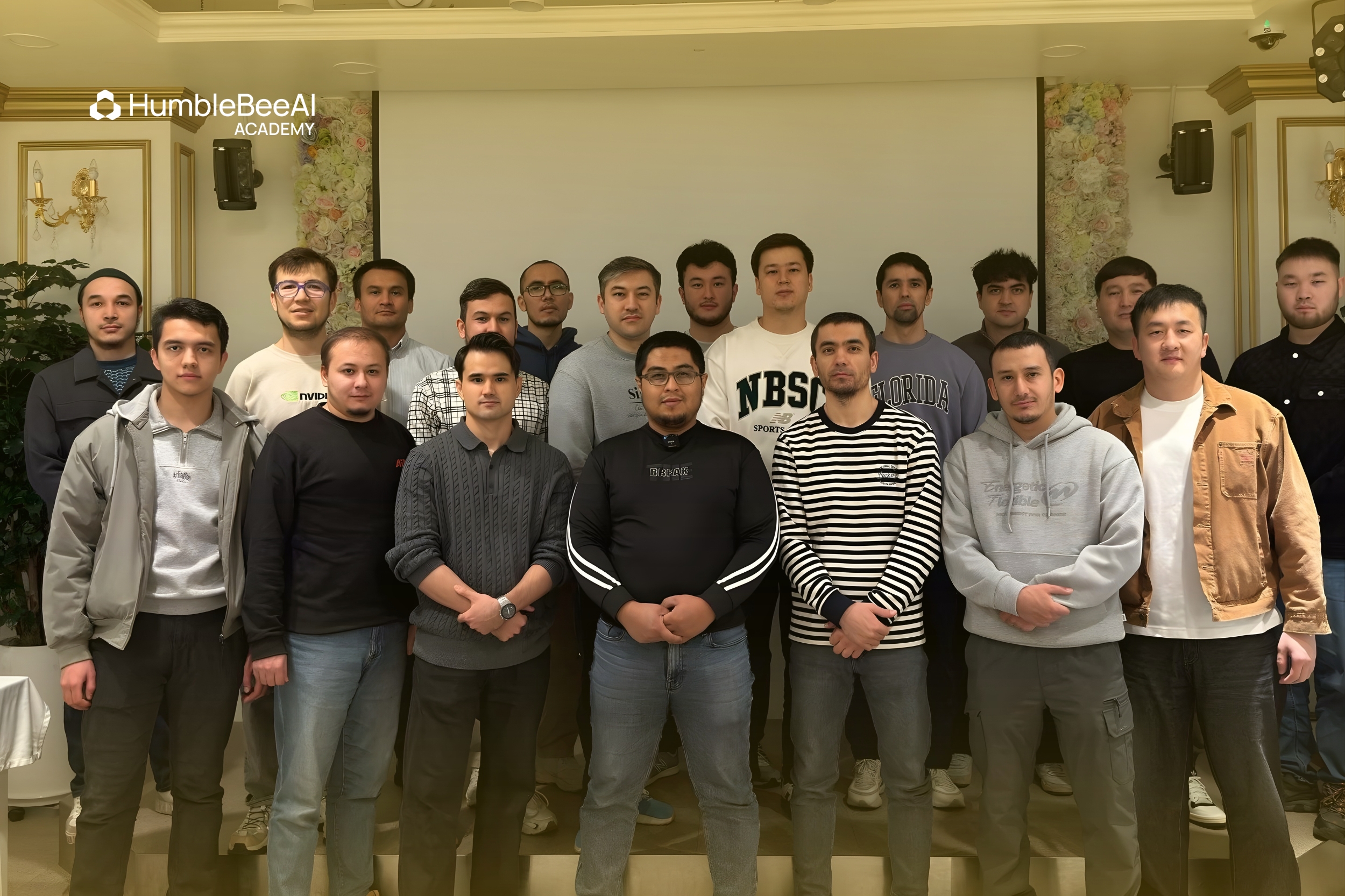
Validated by Industry Leaders
This curriculum has been thoroughly reviewed by senior practitioners from leading technology companies and research institutions. The validation panel includes engineering leaders from DP World, AI researchers from KRICT and DeltaX, and senior engineers from VCA Technology and skyve.
Academic guidance comes from PhD researchers and postdoctoral fellows at Chungnam National University and Inha University, bringing extensive experience in deploying real-world AI systems and advancing machine learning research.
Your Learning Journey
A structured path from fundamentals to AI engineering mastery.
Engineering Fundamentals
Build Your Foundation
Core Systems
Master ML Foundations
Specialization
Choose Your Path
Ready to start your AI engineering journey?
View Full CurriculumMentorship & Programs
Get the level of support you need - from a single expert session to an intensive, cohort-based training environment.
On-Demand Mentorship
Book a 1-on-1 session with experienced AI practitioners to get unblocked, review your code, or plan your next steps.
- Technical deep dives (LLMs, evaluation, debugging, optimization)
- Code and project review (architecture, best practices, production considerations)
- Career guidance (portfolio review, interview prep, specialization direction)
Booking opens soon
HumbleBeeAI Academy
Apply for an intensive training environment with structured progression, mentorship, and guided project work.
- Structured learning path and weekly cadence
- Mentorship and continuous feedback loops
- Hands-on projects and case studies
- Community and accountability
Frequently Asked Questions
Common questions about the curriculum and Academy program.
A world-class learning path should not be locked behind geography or budget. The open curriculum gives self-learners structure, sequence, and a clear standard for what "good" looks like. The Academy builds on the same roadmap with what self-learning usually lacks: mentor feedback, code reviews, accountability, and scenario projects that force real-world application.
They are projects designed to mirror real work. As you finish a module, you apply it immediately in a capstone project, then iterate based on review until it meets a production bar.
No. It helps you build inspectable proof of your skills, not completion claims.
The curriculum is free. Optional paid verification (exams and project reviews) is available for learners who need a credible signal. Hourly mentorship is also available for blockers such as math, debugging, evaluation, and project design.
Maybe. We have a "Direct Entry" path for Soft Landing, but it requires passing a rigorous placement test. We find that 80% of "experienced" self-taught developers still have critical gaps in data manipulation or math that Engineering Fundamentals covers. When in doubt, don't skip it.
For Engineering Fundamentals, any laptop (Windows/Mac/Linux) released in the last 5-7 years is fine. For Soft Landing (Deep Learning), having an NVIDIA GPU is helpful but not required; we show you how to use free cloud resources like Google Colab and Kaggle Kernels.